

If you own a hand-knotted Oriental, Persian, or antique rug, it isn’t just a floor covering — it’s a piece of textile art that can hold its value for generations when it’s cared for correctly. The catch is that the cleaning methods used on machine-made synthetic rugs can permanently damage a fine wool or silk rug. Searching for “oriental rug cleaning near me” is the easy part; knowing what actually separates a specialist from a general carpet cleaner is what protects your investment.
Why Fine Rugs Can’t Be Cleaned Like Wall-to-Wall Carpet
Most carpet cleaning is done in place with hot-water extraction — a machine sprays solution into the fibers and immediately vacuums it back out. That works on synthetic broadloom. On a hand-knotted rug, it’s a problem for several reasons:
- Natural dyes can bleed. Many antique and Persian rugs use vegetable or older dyes that run when exposed to the wrong chemistry or too much heat.
- Wool and silk react to moisture differently. Without controlled drying, fibers can shrink, the foundation can pucker, and the rug can dry stiff.
- Surface cleaning leaves the worst behind. Grit, dander, and dry soil settle deep into the base of the pile and the foundation — exactly where in-home extraction can’t reach.
What Proper Immersion Cleaning Looks Like
A true rug specialist cleans off-site in a dedicated facility, not in your living room. The process is built around the rug, not the schedule:
1. Inspection and dye testing
Before any water touches the rug, the fibers and dyes are tested for colorfastness and the rug is checked for pre-existing wear, moth damage, or weak spots in the foundation. This determines the exact cleaning approach.
2. Dry soil removal
Pounds of dry grit can hide in a single rug. Removing it mechanically before washing is what prevents that grit from grinding into the fibers during cleaning.
3. Full immersion washing
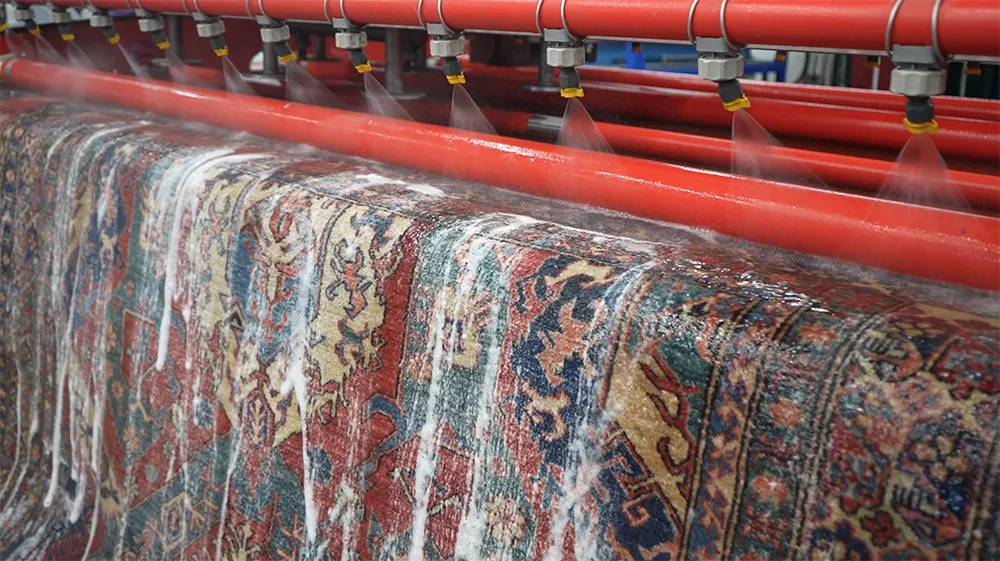
The rug is hand-washed with pH-appropriate solutions and thoroughly rinsed so no residue is left behind. Our auto-rinse system flushes the foundation clean rather than just treating the surface.
4. Controlled drying
Flat, temperature- and humidity-controlled drying protects the foundation and keeps colors and shape intact — something no in-home method can replicate.
When Cleaning Reveals the Need for Repair
Fine rugs that haven’t been cleaned in years often need more than a wash. Worn or unraveling fringe, loose binding, and small holes are common, and they only get worse with use. A specialist can handle fringe repair and rug restoration at the same time, so your rug goes back down both clean and structurally sound. Not sure whether your rug is technically Oriental or Persian? Our guide on Oriental vs. Persian rugs and the difference breaks it down.
How Often Should You Have Them Cleaned?
For most homes, professional cleaning every 12 to 18 months is the right cadence — sooner if you have pets, allergies, or heavy foot traffic. Between cleanings, gentle regular vacuuming (no beater bar) and rotating the rug to even out wear go a long way. For a deeper look at timing, see how often you should professionally clean your area rugs.
Caring for Your Investment in the DMV
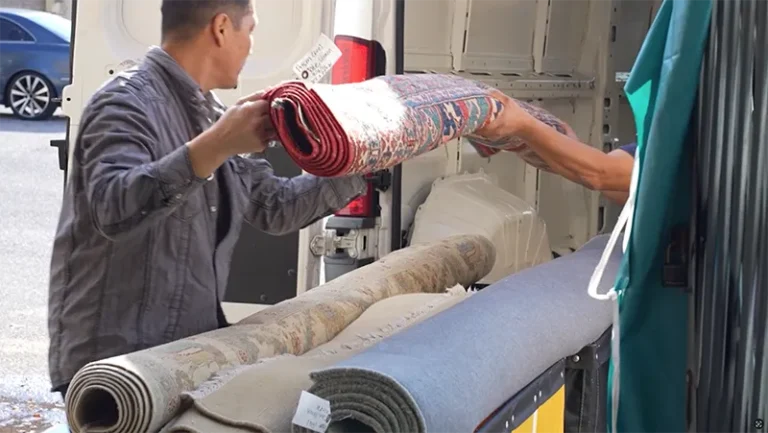
At Residential Rug Care, hand-knotted Oriental, Persian, and antique rugs are exactly what we specialize in. Every rug is cleaned off-site with immersion washing and fiber-specific care, and we offer free pickup and delivery throughout DC, Maryland, and Virginia — so your rug never has to be cleaned with the wrong method in the wrong place.
Learn more about our Oriental and area rug cleaning service, or request a free quote and we’ll pick your rug up at your door.